A new color analysis palette can make a familiar wardrobe look suddenly questionable. Before filling donation bags, try the clothes as outfits. Some pieces already work, some need a different layer, and some are difficult for reasons that have little to do with color. A useful audit separates those situations so your next purchase solves a real problem.
Sort by how clothes actually work
Start with the clothes for one season and one part of your life, such as everyday work or casual weekends. Mixing winter coats, holiday dresses and gym clothes into the same session creates a large task with few comparable decisions. Try a small group rather than emptying every cupboard.
Pull out five pieces you wear often and five you repeatedly avoid. Note the reason before checking a palette. A shirt may be too tight at the shoulders, a knit may itch, or trousers may need shoes you do not own. Those problems will remain even if the color is an exact match for a swatch.
Use three temporary groups: reliable, needs testing, and unsuitable for a known reason. Keep the third group specific. “Sleeves restrict movement” is a clearer decision than “wrong for my season.” If a useful garment needs a small repair or alteration, put it with the items needing action rather than confusing it with an unwanted color.
Make a short inventory of the reliable clothes. Record their broad color, depth and function: medium blue work shirt, dark brown trousers, cream everyday knit. The list may reveal that your practical wardrobe palette already exists. It can also show an imbalance, such as plenty of bright tops but no comfortable neutral layer to wear over them.
If you began with the question “How do I find my color palette?”, these repeat wears are valuable evidence. They show what you choose under ordinary conditions. A color analysis result can suggest new comparisons, but it need not overrule a garment you consistently enjoy and use.
Test uncertain neckline colors
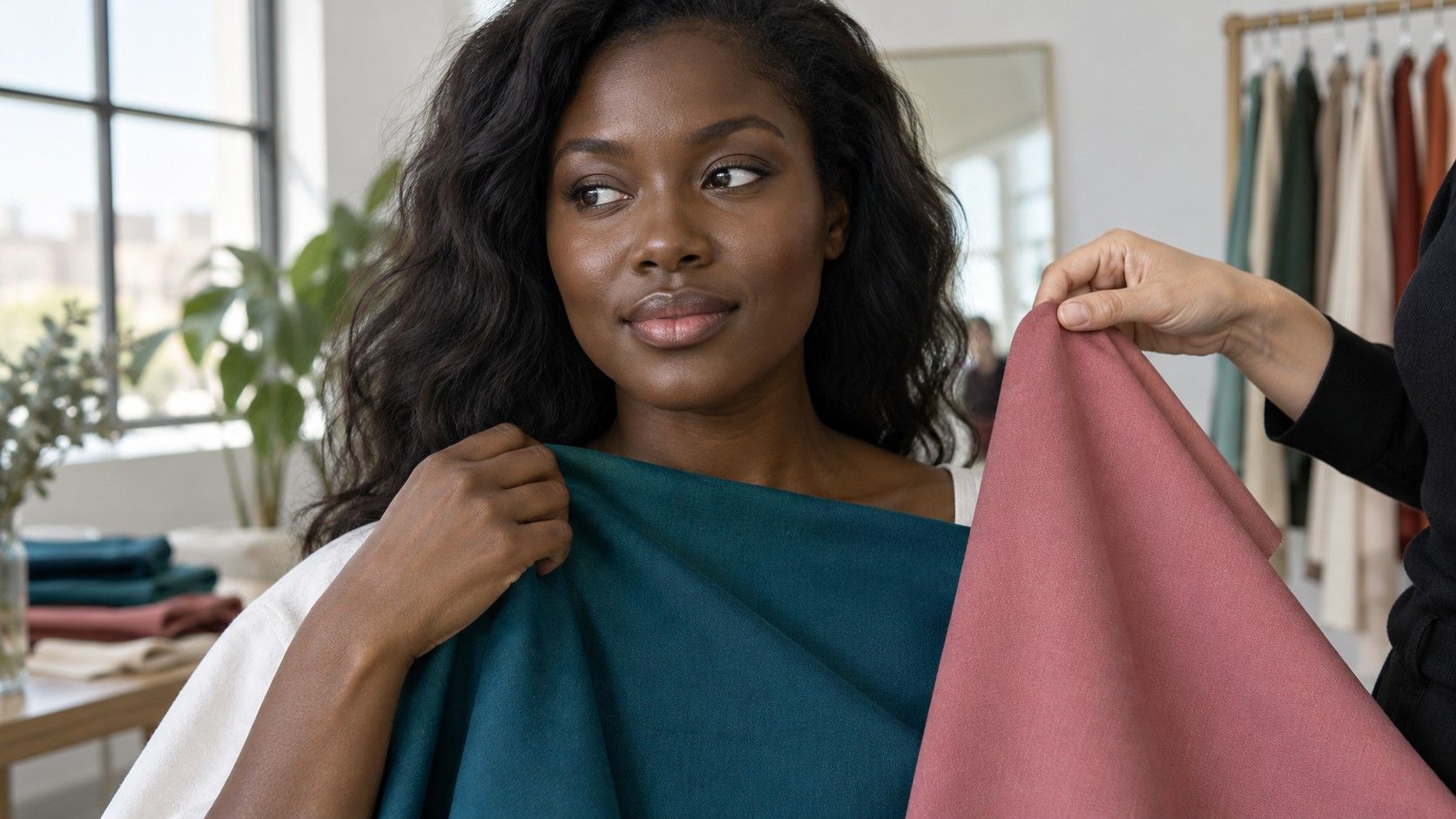
Give face-framing pieces the most attention. A shirt, scarf or high-neck sweater sits directly beside the face, while trousers and shoes contribute from farther away. Start with two or three uncertain tops instead of trying to rank every color in the wardrobe.
Use indirect daylight near a window, with nearby lamps switched off. Keep makeup and hair reasonably consistent during each comparison. Cover a bright top with the fabric you are testing so its neckline does not interfere. A quiet background makes it easier to notice the relationship between the garment and the face.
Compare like with like. Place a soft warm rose against a soft cool rose to explore temperature, or a medium gray against charcoal to explore depth. A neon green shirt against a pale beige knit changes several properties at once. You may prefer one, but that pair will not explain which color quality you preferred.
Look from a normal conversational distance. Does the garment feel balanced with your face and hairstyle, or does it dominate the view? Do you enjoy that effect for the occasion? These are style judgments, not measures of health or beauty. Strong contrast can be exactly what you want for an evening outfit and more than you want for a quiet workday.
Take a photograph if it helps you remember, but watch for automatic camera changes. If the background brightens when you switch tops, exposure may have shifted. A filter can also alter skin and fabric together. Check the mirror as well and repeat uncertain comparisons another day before making an expensive decision.
Adapt with layers and accessories
Try changing the amount of a difficult color near your face. Open the collar, add a cardigan or put a scarf in a preferred shade between the top and your neckline. A pale shirt under a dark jacket presents a different balance from the same shirt worn alone. Small adjustments can preserve a garment you otherwise like.
Think about placement rather than declaring a color unusable. A camel sweater that feels too warm at the face may still suggest a useful camel skirt or bag. If you own the sweater already, a cooler shirt collar might be enough to make the combination enjoyable. There is no reason to buy a replacement before trying the clothes together.
Accessories can connect colors across an outfit. A scarf containing navy and brown may link a navy coat with brown trousers. Shoes that repeat a darker tone can give a pale outfit a more deliberate base. Choose details you would actually wear; a collection of corrective scarves is not useful if you dislike scarves.
Check the complete outfit in the situations that matter. A layer may solve a color concern but become too warm indoors. A large necklace may catch on a uniform or compete with glasses. An open collar may be unsuitable for your workplace. Keep an adaptation only if it improves the outfit without creating a practical problem.
Dyeing clothing is a more involved option. Fiber content, stitching, existing color and care instructions all affect the result, and some garments will not take dye evenly. Treat it as a separate project with a risk of damage rather than a guaranteed rescue. Test simple styling changes first, especially for valuable pieces.
Find repeatable combinations
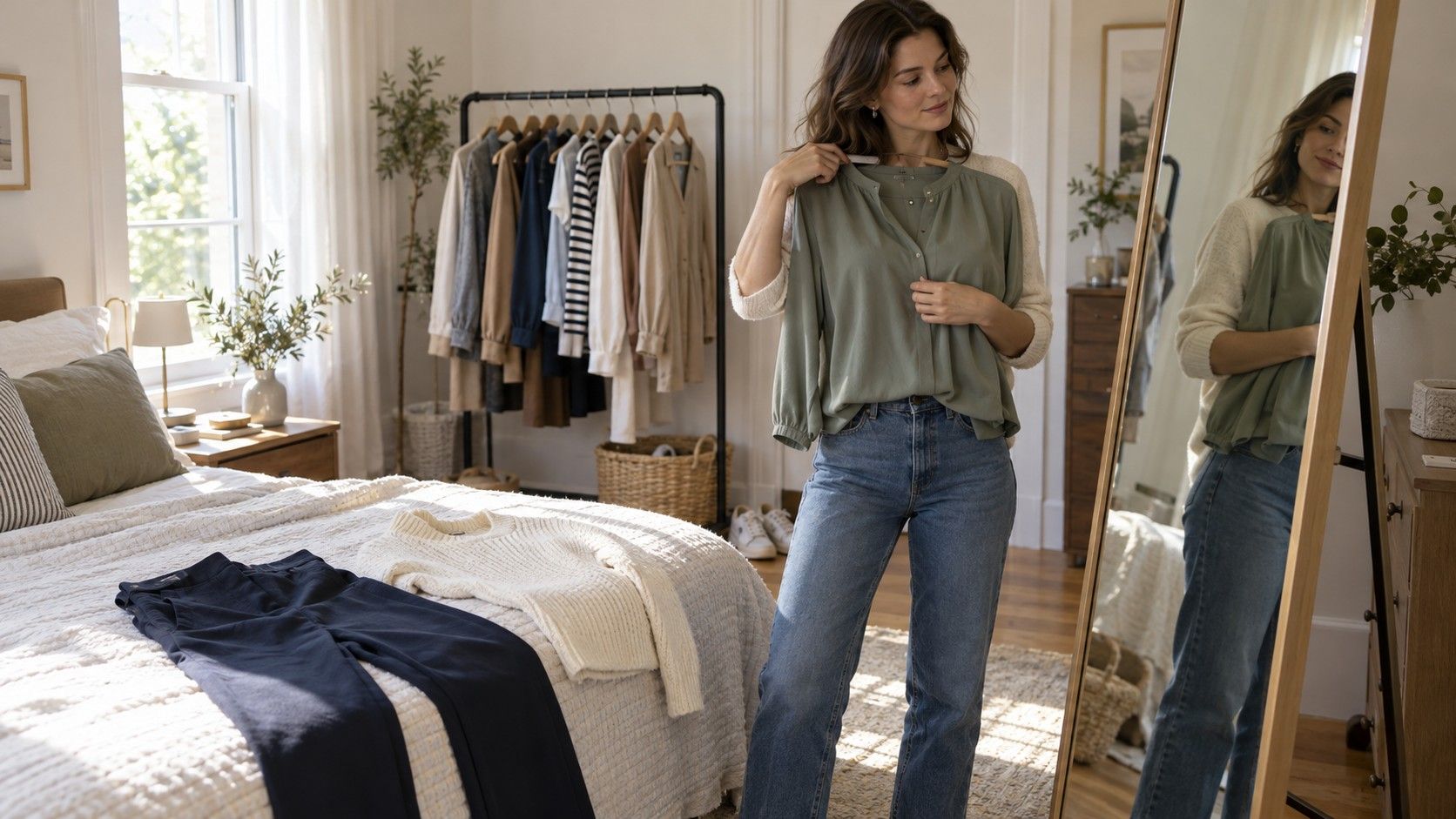
Choose two useful bottoms and three tops from the reliable and adapted groups. Try each top with both bottoms, then add the layers and shoes you normally use. Six theoretical pairings may produce only three outfits you like, and that is useful information. The audit is finding workable combinations rather than proving every garment must coordinate with every other one.
Pay attention to near-matching neutrals. A jacket and trousers in slightly different dark blues can look accidental when their surfaces are similar. A clearer difference in depth or texture may work better. A phone screen is a poor place to settle subtle navy, brown and gray comparisons; place the actual fabrics together in daylight.
Photograph the complete outfits from a consistent distance. Include the shoes and a layer if either is essential. Give each picture a practical label such as rainy commute, office meeting or warm weekend. These images become a dressing reference when you have less time, and they show which garments repeatedly support the rest.
Keep a note of anything you still avoid after assembling a good combination. Perhaps a blouse requires too much ironing, a jacket feels stiff when seated, or the outfit looks right but feels unlike you. Personal style belongs in the decision. You do not have to keep a technically coordinated outfit that makes you reluctant to leave the house.
Give uncertain pieces a short trial period rather than a permanent space at the back of a rail. Wear each in a planned outfit when the weather and occasion suit it. Record what happened in plain terms: comfortable all day, collar kept slipping, preferred the darker layer. A real wear test often answers more than another hour beside the mirror.
Replace only a demonstrated gap
Write the shopping list after the outfit tests. A useful entry names both function and color range: a washable medium-blue work top, a dark neutral cardigan that fits over shirts, or comfortable shoes that work with both regular trousers. “Something in my season” is too broad to prevent another isolated purchase.
Check whether the gap is actually about color. If every top works with your trousers but none is warm enough for the office, the missing item is a layer. If a favorite skirt only needs a better waistband fit, an alteration may be more useful than a new palette match. Solve the reason the outfit cannot be worn.
Bring a fabric reference or wear the piece you need to coordinate when shopping. Color names vary, and lighting can make a gray look warmer or a navy look brighter. For online purchases, inspect the return terms and test the garment with your own clothes before removing tags. A product picture cannot guarantee a precise match.
Keep useful clothes until their replacements have passed the same outfit test. There is no need to discard a dependable black jacket while searching for a softer neutral, particularly if black still suits your work and preferences. Changing the shirt under it may provide all the adjustment you wanted.
Remove things thoughtfully once the decision is clear. Separate wearable donations or resale items from damaged textiles, and follow the requirements of the receiving service. Put sentimental clothing outside the working wardrobe if you want to retain it. An audit can free dressing space without forcing every meaningful garment into daily use.
Revisit the list after a few weeks of normal dressing. Keep the combinations that survived laundry, weather and busy mornings. Let the palette describe those useful choices, then expand it slowly when a new garment has a clear role. The strongest result is a rail of clothes you can wear together, with fewer unresolved decisions at the start of the day.