Going gray can make a dependable black sweater feel suddenly severe, or make a once-quiet blue look newly lively. That does not mean every color in your wardrobe has expired. Hair changes the frame around the face, and that frame affects how clothes, glasses and makeup read together. A few controlled comparisons can show where to adjust contrast while keeping the pieces you still enjoy wearing.
Notice what changed around the face before choosing a new season
Gray hair can change the balance of light and dark in your appearance, especially when it replaces a much darker dyed color. But gray is not a single shade. A head of dark-and-silver hair creates a different pattern from mostly white hair, and a silver streak near the face may matter more to an outfit than a darker patch at the back.
Look at your hair as you normally wear it, including the parting and any fringe. With dark eyes and brows, lighter hair can still leave distinct contrast around the eyes. With lighter brows and eyes, the overall effect may become quieter. These are useful observations about your present appearance, not a reason to apply a universal “soft colors after gray” rule.
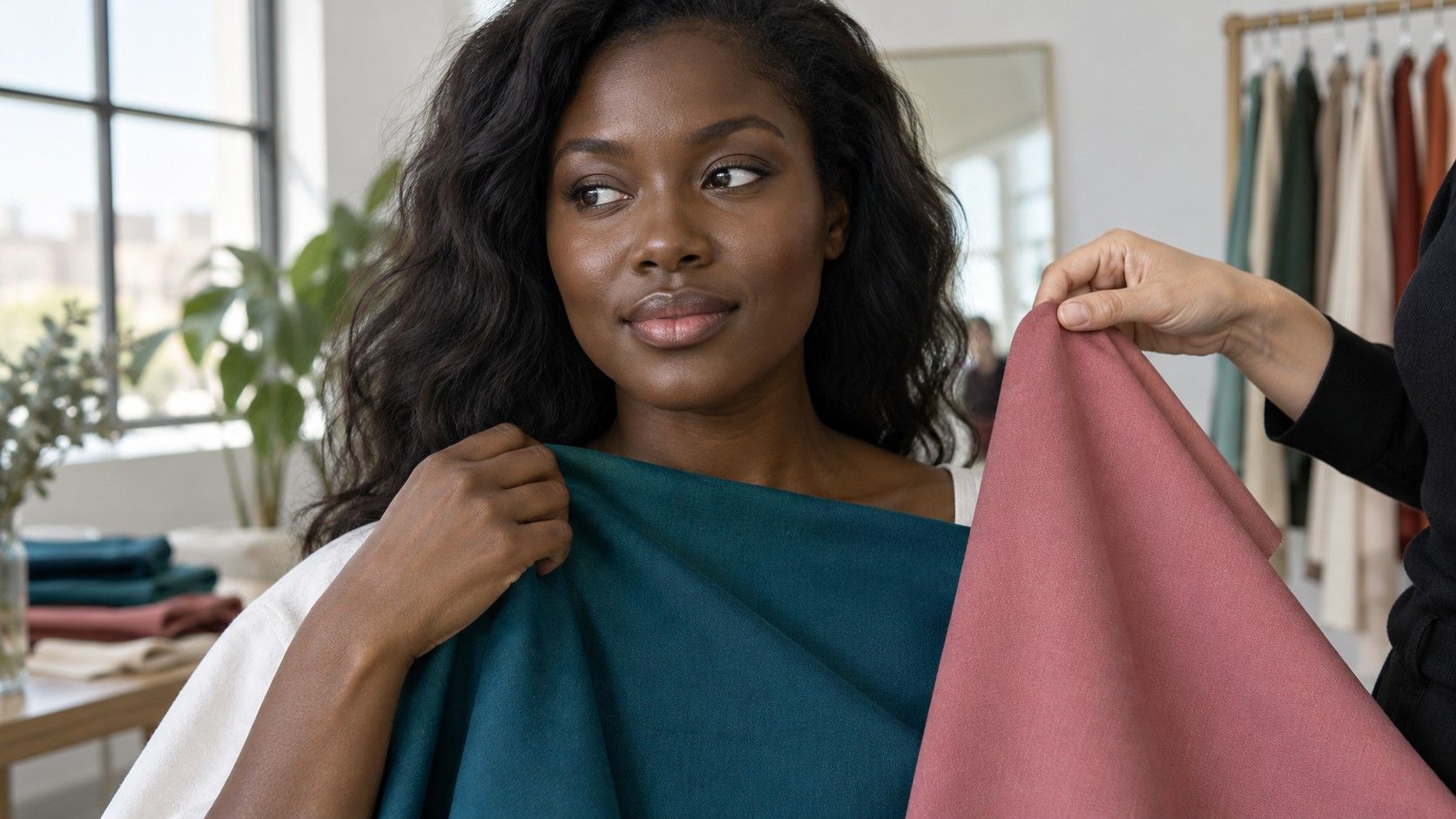
Compare your current face with and without the hair visible using a plain cloth over it. This can help separate the influence of the new hair frame from the effect of a fabric. Do not treat the covered version as your only valid result: you wear the hair in daily life. Hair colour analysis is most useful when it explains how a complete look has changed.
Also distinguish a color adjustment from a style adjustment. A crisp white shirt might still look balanced but feel too formal beside a softer haircut. A silver bob might make a familiar striped top feel more graphic. A different neckline, texture or scale of pattern can solve the problem without replacing the color family.
Recheck the neutrals you wear most often
Start with your existing black, navy, gray, cream, white and brown garments. Face a window in indirect daylight, turn off warm lamps and hold each piece at a similar height below the chin. Keep the background plain and compare without a beauty filter. If you use photos, keep the camera position fixed and watch for automatic exposure shifts as dark and light fabrics enter the picture.
Black is a useful test because its effect may become more obvious beside lighter hair. It can create an intentional, striking frame, particularly when echoed by dark glasses or brows. It can also feel heavier than you want. Compare it with charcoal and navy in similar fabrics before deciding that black itself is the issue. A shiny black blouse and a fuzzy charcoal knit are testing texture as well as color.
White and cream deserve the same care. Bright white may echo the lightness in the hair; cream may provide a gentler transition, or may introduce warmth you do not enjoy. Neither is a compulsory gray-hair neutral. Hold them together, then alternate them near the face. Pay attention to the face remaining distinct rather than assuming that the piece matching the hair is automatically best.
Choose two working neutrals for now. They can be colors you already own and wear happily, even if an online palette excludes them. Try a familiar top with different glasses or an open neckline before setting it aside. When the change you need is small, accessories and the amount of fabric close to the face are often easier to adjust than a whole wardrobe.
Find out whether accents need softness, clarity or a new scale
Take a color you like and compare a muted and a clearer version at roughly the same depth: dusty rose against a cleaner pink, for example, or gray-blue against a more saturated blue. Keep the warmth similar where you can. A vivid coral against pale lavender is too many changes at once to tell you whether brightness is helping.
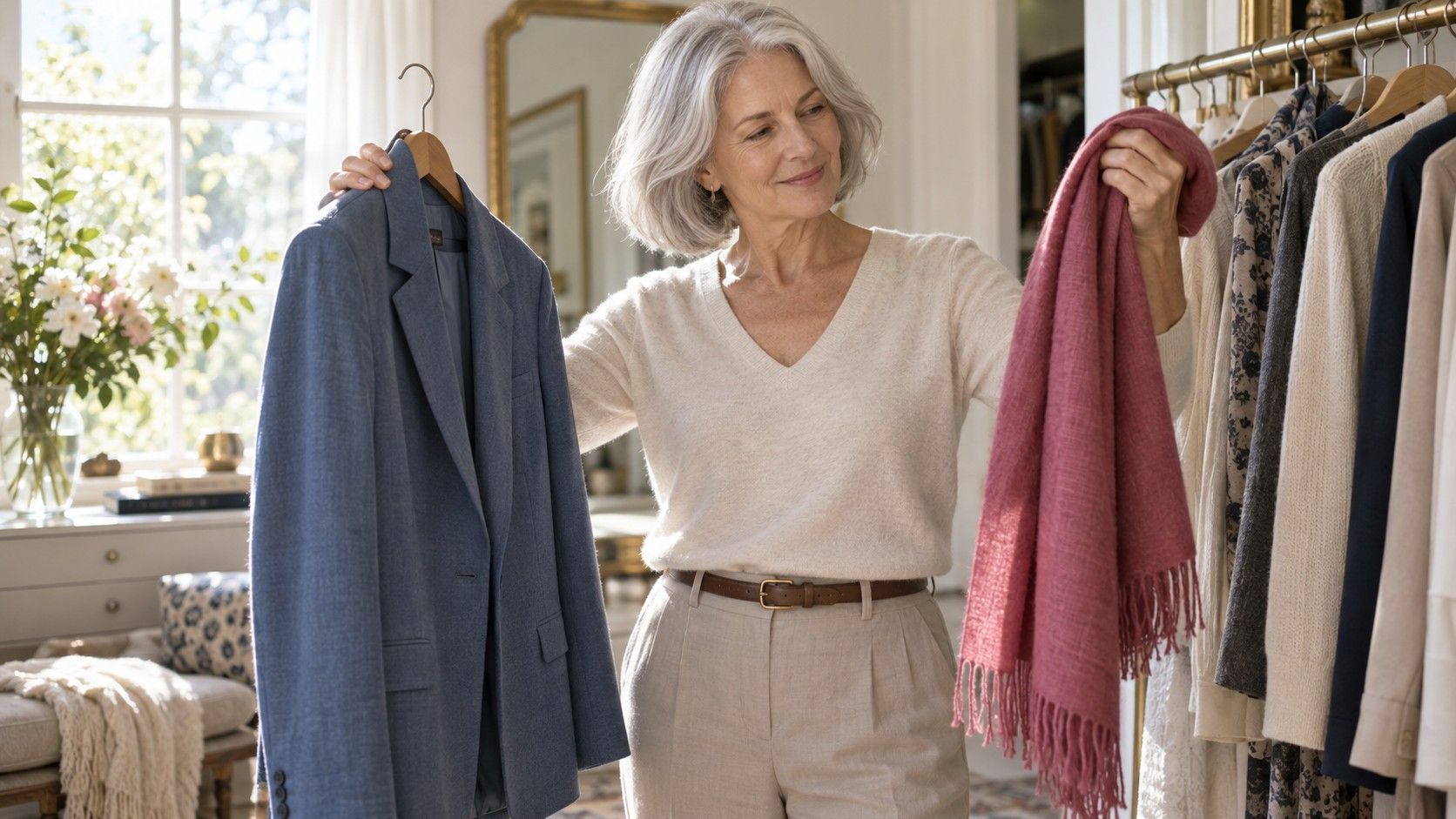
Some people enjoy clearer accents after going gray because the hair provides a quieter backdrop. Others prefer a muted color that connects more gently with their features. There is no need to choose between an entirely bright wardrobe and an entirely soft one. A clear scarf worn with a medium-gray jacket may deliver enough definition while leaving the rest of the outfit comfortable.
Run a second comparison for contrast within an outfit. Try two neighboring depths, such as medium blue with navy, then a larger jump, such as white with navy. Keep the garments near the face when judging the effect. A pale trouser changes the outfit as a whole but will not frame your face the way a pale collar does.
Patterns add another variable. A small low-contrast print can blend at a distance, while broad black-and-white stripes remain very definite. If a once-loved print feels busy beside salt-and-pepper hair, compare a larger plain area at the neckline. The problem may be competition between two patterns rather than a wrong season or a ban on black and white.
Make a small makeup and glasses comparison
Use your usual makeup first, then change one element at a time. If an old lip color feels disconnected, try a less saturated or slightly deeper option in a similar family before replacing everything. Compare in daylight and again where you normally spend time. The aim is a finish you enjoy with your hair and clothes, rather than an instruction to compensate for aging.
Brows can affect perceived contrast, but stronger is not automatically better. A very dark or sharply drawn brow may become the dominant feature beside silver hair; a softer shape might feel more comfortable. Keep any adjustment modest and reversible while you assess it. You do not need to dye or darken anything to make a color palette valid.
Glasses occupy a large and consistent area near the eyes. Compare your current frames with a lighter, translucent or more colored pair if you have access to alternatives. Dark frames can give structure to a low-contrast outfit; pale frames may produce the quieter effect you prefer. Frame thickness, finish and shape matter alongside the color, so a new pair should earn its place through a full-face comparison.
When you want to judge clothing alone, do a separate round with minimal or no tinted makeup if that suits you. Then restore your everyday routine and check the favorite fabrics again. Both rounds provide useful information: one reduces variables, and the other tests the face you actually present during the day.
Keep a workable wardrobe during the transition
A growing-out stage may include natural silver roots, dyed lengths and several changing proportions. Buying a complete new palette at every stage is expensive and hard to justify. Use flexible combinations: a reliable neutral top, an adjustable scarf and jewelry you can remove. Recheck the pairing when the hair changes substantially, rather than trying to predict the exact shade of the final result.
Put doubtful clothes in a temporary group instead of discarding them. Try each with a different inner layer or neckline, and judge it as part of an outfit. A warm brown coat might still work beautifully worn open over a familiar blue. A black dress can remain useful with a lighter collar or a silver necklace even if an uninterrupted black neckline now feels too stark.
For a practical trial, assemble three outfits from existing pieces: one for an ordinary day, one for work or a social plan, and one slightly dressier combination. Wear each in its real setting before shopping. An outfit that looks persuasive in a comparison photo may feel too bright for your taste, while an apparently quiet combination may become a favorite because it is easy to repeat.
Write down the adjustment that helped: “charcoal near the face,” “cleaner blue accent,” or “less contrast in small prints.” These notes travel better than a seasonal label. Keep room for a piece you simply love, even when it sits outside the emerging pattern.
Use a new online result as a question to test
A color season analysis tool may give a different answer once your hair occupies a lighter area in the photograph. Lighting, camera processing and the image crop can also change the output. Use a clear, unfiltered picture in balanced light, keep the conditions consistent and compare the suggested colors with actual fabric before spending money.
If two results disagree, look for overlap rather than forcing a winner. Both may include medium blues or favor a little definition near the eyes. Test those shared suggestions beside colors you already trust. A tool cannot know how formal you like to dress, how much maintenance you accept or which necklace makes a plain shirt feel like yours.
Retain the colors that still do their job. Adjust the ones that need a different amount, texture or companion shade. When a new color works repeatedly with your present hair, add it gradually in a garment you will use. There is no deadline for completing a palette, especially while the hair itself is still changing.