A new hair color can make a familiar sweater feel wrong overnight. Copper lengths add warmth beside the face; a dark gloss strengthens the outline; pale highlights change the balance of light and dark. Personal color analysis with dyed hair works best when you make two comparisons: one with the dyed lengths covered, and another with the hair styled as you actually wear it.
Cover dyed lengths for a baseline
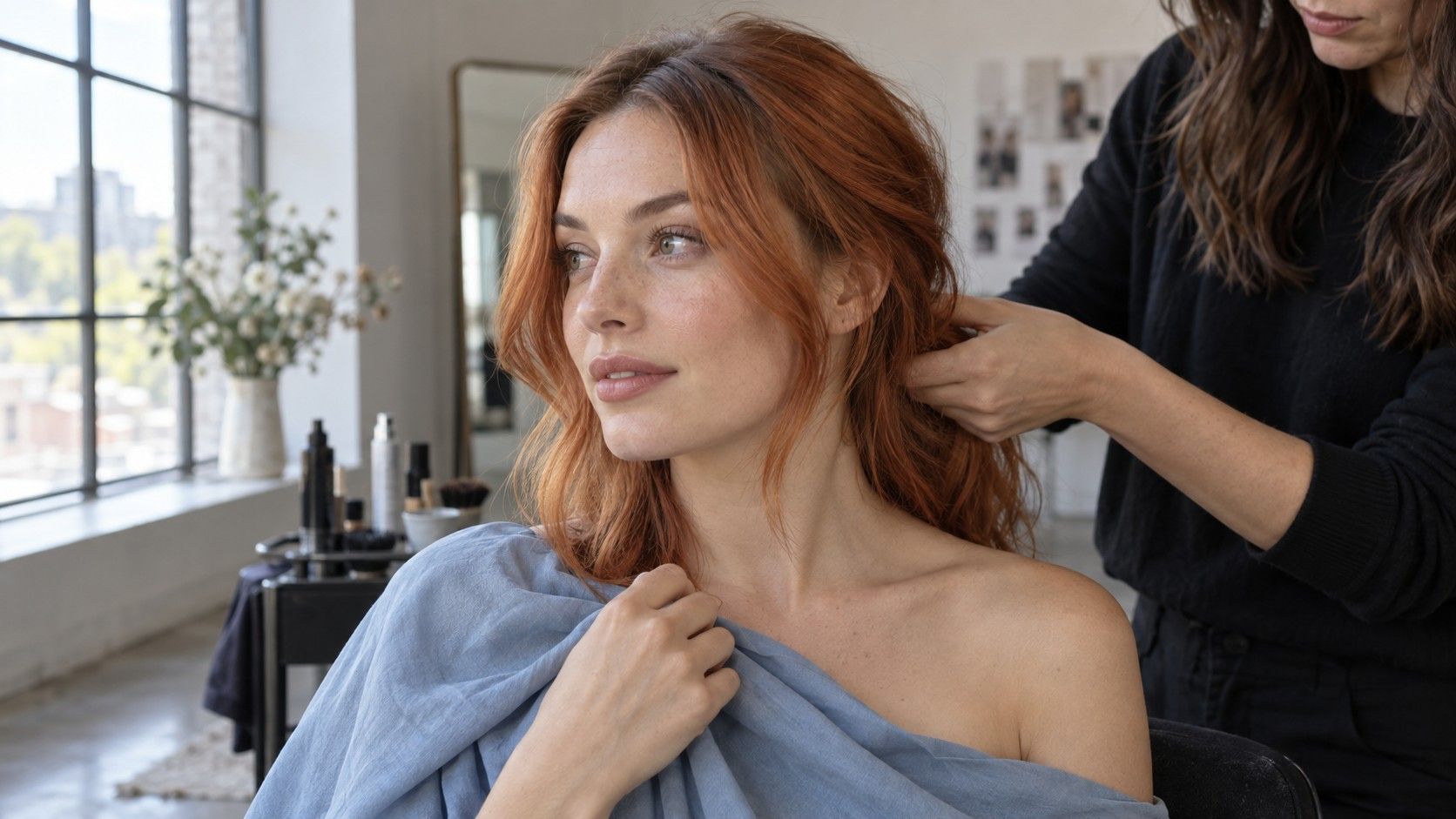
The first comparison asks what clothing colors you prefer around your face when the dye is less visually prominent. Pull the lengths back and cover them with a plain, matte cloth in a quiet neutral. Keep the forehead and face visible. A bright white towel or a black head wrap may add a strong contrast of its own, so try another neutral if the covering dominates the view.
Natural roots can provide context, but a narrow strip does not reveal an entire original hair color. Roots may look darker beside bleached lengths, and a wet or oily section can appear different from clean, dry hair. Use any older photographs as supporting clues only. Their lighting, makeup and camera processing may differ from today's test.
Face a window in indirect daylight and switch off nearby warm lamps. Avoid direct sun across the face, heavy makeup and tinted glasses for the baseline comparison. You are simplifying the scene so the fabric differences are easier to see. You do not need to make yourself look unusually pale or remove every ordinary feature of your appearance.
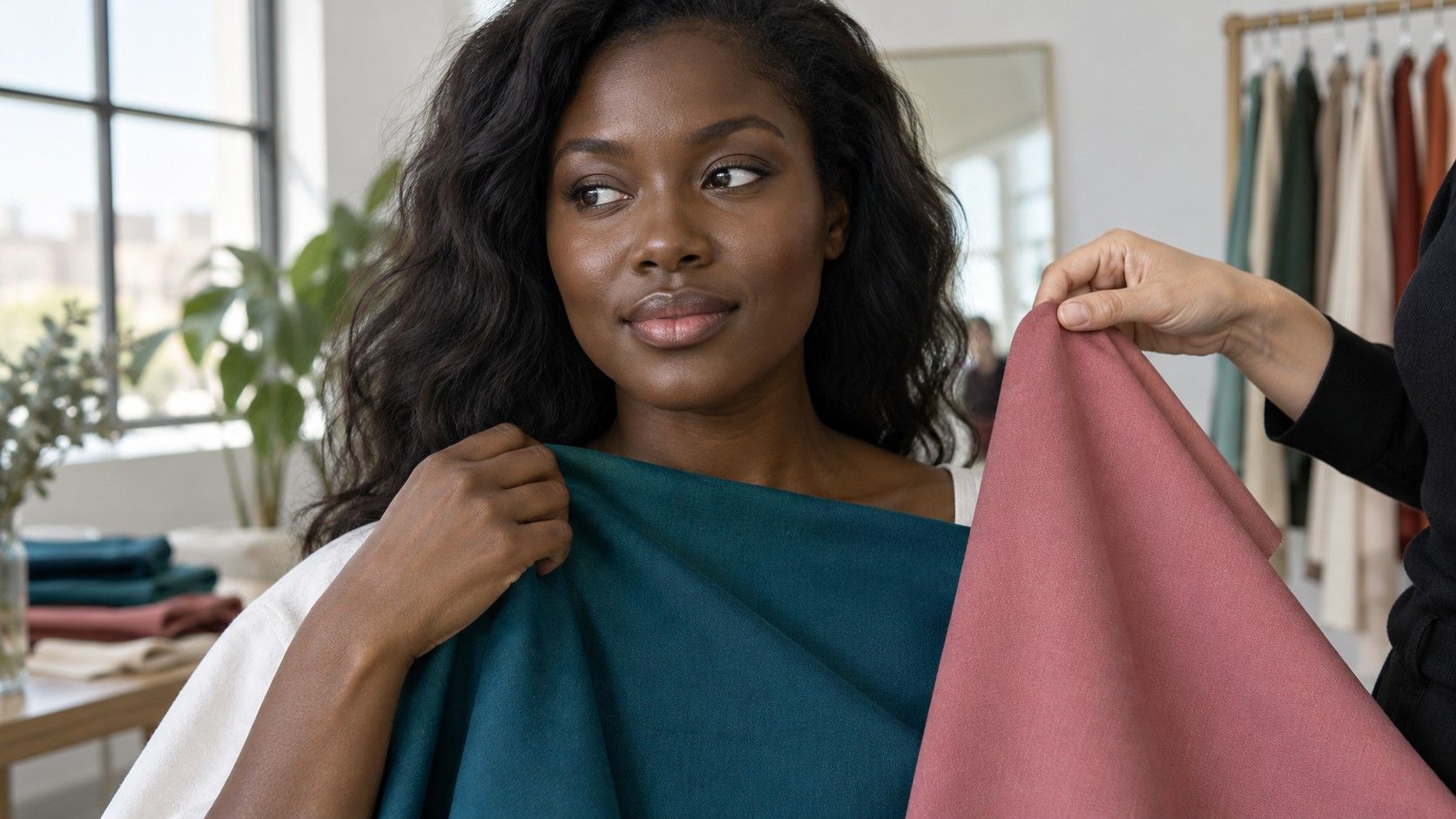
Hold a shirt or scarf below your chin, covering the neckline of your current top. Compare two fabrics at a time and keep the background, mirror and position fixed. Start with similar depth and brightness: a soft cool pink against a soft warm pink, for example. A bright orange against a pale gray changes too many things at once to explain the result.
Compare with hair visible
Now uncover your hair and repeat the same fabric pairs. Arrange the lengths near your face as you normally wear them, including a fringe if you have one. The difference between the covered and uncovered views is valuable. It helps separate a color you like beside your face from a color that coordinates particularly well with your current dye.
Suppose a cool blue works comfortably with the hair covered, but a warm beige feels more coherent beside copper lengths. That does not prove your underlying season has changed. It shows that the visible hair is now an important part of the outfit. You may choose blue with the copper as a deliberate contrast, or use beige when you want the colors to blend.
Try the hair both loose and tied back if you regularly wear it both ways. A dark bob framing the cheeks has more influence near the face than the same hair in a bun. Balayage can behave differently again: darker roots remain close to the face while lighter pieces enter the neckline. The placement matters as much as the name printed on a dye box.
Take paired photographs only after checking the mirror. Keep the camera position and exposure as consistent as the device allows. Phones may brighten a face surrounded by dark hair or shift white balance when a warm color fills more of the frame. If the background changes color between shots, treat the image comparison cautiously and repeat it in steadier light.
Understand why contrast shifts
Hair color analysis becomes easier when you separate temperature, depth and clarity. Moving from medium brown to nearly black changes depth and often increases the contrast around the face. Moving from beige blonde to copper changes the warm-cool relationship. A vivid pink or blue can become the strongest color in the composition, regardless of a seasonal label.
These shifts affect clothes in different ways. A pale sweater beside dark hair creates a stronger light-dark boundary than it does beside light hair. A muted olive may sit quietly with a soft brown but feel less settled beside a clear red dye. You can test the outfit response without deciding that one hair color is universally right or wrong for you.
Also distinguish a mismatch in color from a change in styling. Straight, glossy hair reflects light differently from matte curls. A freshly styled fringe changes how much forehead is visible. A photograph taken after a salon visit may include new makeup and better lighting too. Compare like with like before attributing every improvement to a warmer or cooler shade.
Watch for faded lengths and contrasting roots during the weeks between appointments. A blonde that looks beige initially may later appear more yellow; a vivid tone may become softer. Record the color you are judging now rather than treating the original salon photograph as a permanent description. Clothing that coordinates well throughout that range can be especially useful.
Choose reversible color changes first
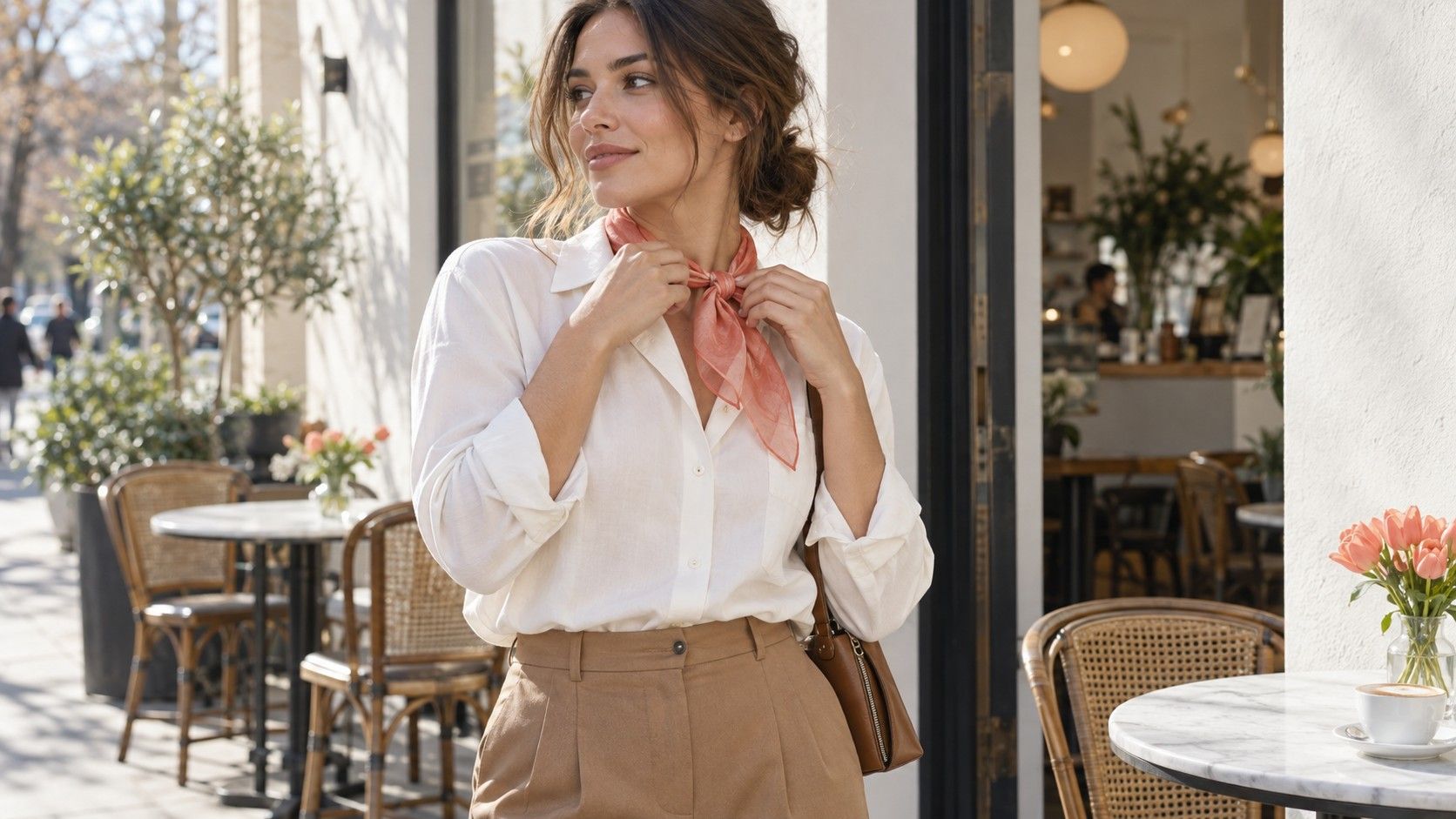
Before buying a new wardrobe or booking a major hair change, adjust the area closest to the face. Swap a scarf, open a collar, change an earring or put a neutral layer over a bright top. If a sweater feels disconnected from your hair, a small accessory that repeats either color can make the combination feel intentional.
Use garments you already have to test light-dark balance. With much darker hair, compare a pale shirt on its own with the same shirt under a medium-depth jacket. With lighter hair, try charcoal against a softer gray. You may prefer the stronger option for one outfit and the softer one for another. The goal is a useful range, not a rule that bans half your closet.
Digital hair filters can help you imagine a broad direction, but their edges, skin adjustments and artificial shine can make a shade seem more convincing than it is. Compare an unedited image alongside the preview. A temporary wig or a physical hair swatch near the face gives a different kind of comparison, though neither guarantees the final salon result.
For a change involving bleach, a strong correction or previously colored hair, discuss feasibility with a qualified colorist before committing. A style palette cannot tell you how an existing dye will lift or what condition the hair can tolerate. Follow the product and salon instructions for any relevant allergy or strand testing; visual color matching cannot replace those checks.
Prepare for a salon discussion
Bring a few photographs in ordinary daylight: current hair loose, current hair pulled back, and a useful earlier color if you have one. Add two or three clothing colors you wear often. A scarf in a favorite teal or a photograph of your work wardrobe gives the colorist practical context that a season name alone may not convey.
Describe the change in concrete terms. “I want less orange around my face” is clearer than “make me a Summer.” “I like the depth at the roots but want softer pieces at the front” separates two decisions. Ask how the proposed color may fade, how much maintenance it needs and how it will look as roots grow, rather than judging only a freshly finished reference photo.
Reference pictures are useful for placement and overall effect, but the person in the picture may have a different starting color, texture or haircut. Ask which part of the example can be recreated and which part depends on lighting or styling. If several processes are involved, understand the sequence before assuming the final shade is available in one appointment.
Keep a simple record after the change: the date, the broad color direction, and the shirts or scarves you liked beside it. Repeat a few familiar fabric comparisons after the first washes and later as the color fades. This creates a practical wardrobe reference for the hair you live with, rather than a verdict based on one polished salon photograph.
You can retain a working palette while changing your hair. Keep the fabrics that remain reliable with the lengths covered, then add a few colors that cooperate with the dye you enjoy. When the hair changes again, revisit those additions first. There is no need to replace every useful neutral each time you choose a new shade.